

The First Vibrator: A 19th Century Medical Marvel
4 Months ago
Hormonal Balance & Libido: An Endocrine Deep Dive
4 Months ago
The Science of Sensation: Receptors & Neurology
5 Months ago

The pelvic floor is easy to overlook until weakness, bladder leakage or other symptoms appear. Yet these muscles play an important role in bladder and bowel control, support the pelvic organs and contribute to sexual function. Pelvic floor exercises – often called Kegel exercises – can help strengthen these muscles, while Kegel balls or vaginal weights can provide an additional way to make training more noticeable and structured.
The pelvic floor is easy to overlook until weakness, bladder leakage or other symptoms appear. Yet these muscles play an important role in bladder and bowel control, support the pelvic organs and contribute to sexual function. Pelvic floor exercises – often called Kegel exercises – can help strengthen these muscles, while Kegel balls or vaginal weights can provide an additional way to make training more noticeable and structured.
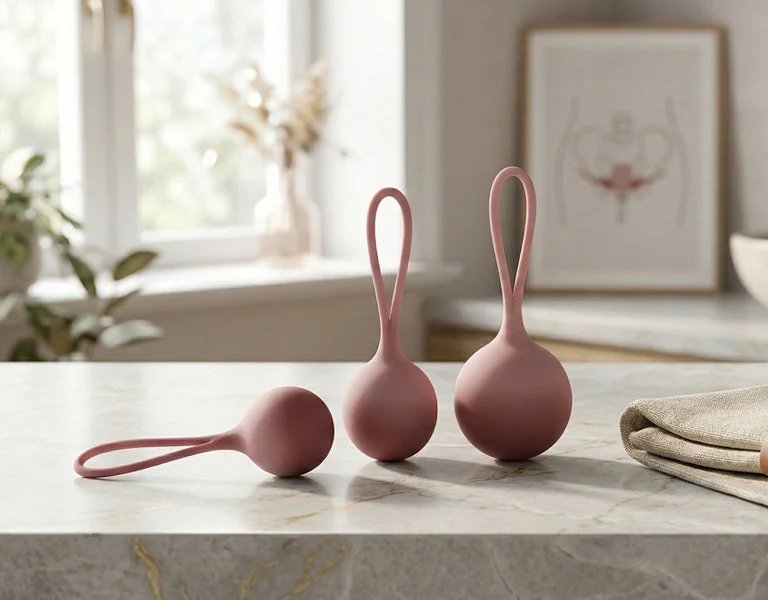
The pelvic floor is a group of muscles and connective tissues located at the base of the pelvis. These muscles help support the bladder, bowel, uterus and other pelvic organs.
They also contribute to bladder and bowel control, core stability and sexual function. Like other muscles in the body, the pelvic floor needs to be able to contract effectively – but it also needs to relax.
Pelvic floor muscle training is commonly recommended for women experiencing stress or mixed urinary incontinence. Regular exercises can improve strength, endurance and control when they are performed correctly and consistently.
Pregnancy, childbirth, ageing and other factors can affect pelvic floor function. However, pelvic floor problems are not limited to a particular age or stage of life.
Training is not simply about squeezing as hard as possible. Good pelvic floor function involves being able to contract, hold and fully relax the muscles when needed.
Kegel balls, pelvic floor balls and vaginal weights are products designed to be inserted into the vagina during certain types of pelvic floor training.
The weight provides sensory feedback that can make it easier for some women to become aware of their pelvic floor muscles. To keep a vaginal weight comfortably in position, the pelvic floor muscles may need to contract and respond to the additional load.
Research into weighted vaginal cones suggests that they may help some women with stress urinary incontinence. However, current evidence does not show that weighted devices are clearly superior to conventional pelvic floor muscle exercises.
No. Kegel balls are an optional training aid, not a requirement.
Pelvic floor exercises can be performed without any device, and learning the correct contraction technique is more important than adding resistance.
For some women, however, a vaginal weight can make the exercise feel more tangible and provide additional feedback during training.
Imagine that you are trying to stop yourself from passing wind and urine at the same time. The muscles you feel tightening around the pelvic openings are part of your pelvic floor.
Try not to compensate by strongly tightening your buttocks, thighs or abdominal muscles.
A pelvic floor exercise involves gently contracting the muscles, holding the contraction and then allowing the muscles to relax completely.
Both parts matter. A healthy pelvic floor needs strength and control as well as the ability to relax.
Pelvic floor training usually requires regular practice over several weeks or months. Medical guidance for urinary incontinence often recommends a structured programme lasting at least three months.
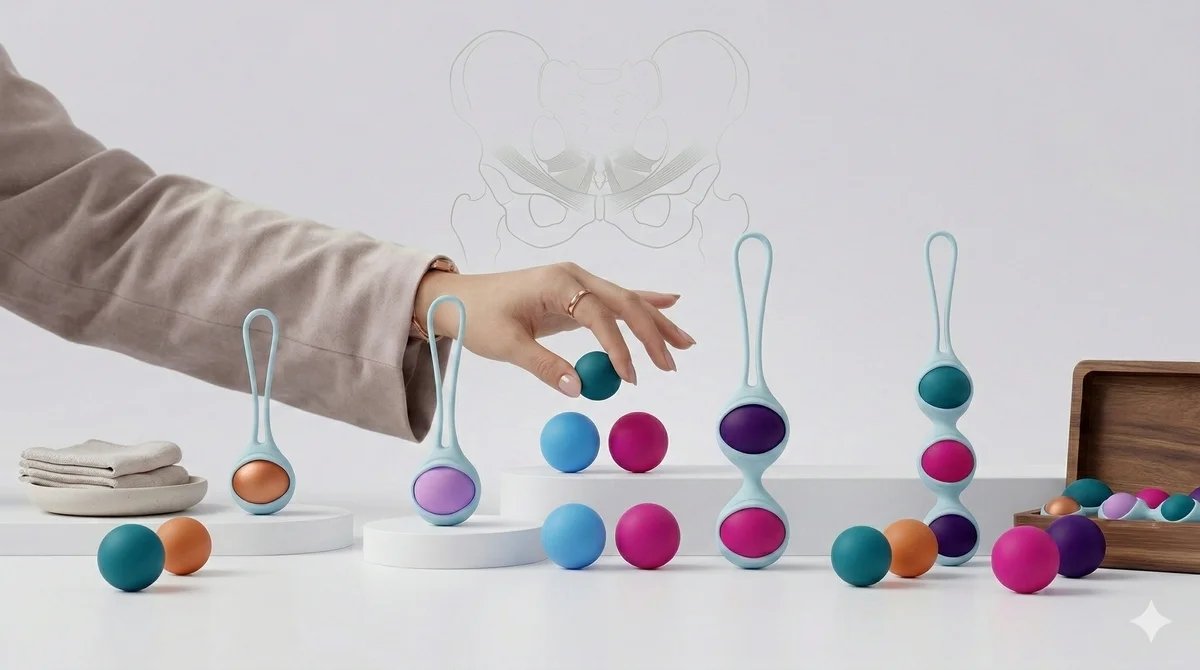
If you choose to use Kegel balls or vaginal weights, start with a product that feels comfortable and manageable. Progressive sets with different weights can allow you to adjust the level as your control improves.
Heavier does not automatically mean better. Correct technique and comfort are more important than using the greatest possible weight.
The pelvic floor is involved in sexual function, and some women report improved sexual awareness or satisfaction after pelvic floor muscle training.
However, sexual sensation depends on many factors, including nerve function, blood flow, arousal, hormones, emotional well-being and personal preference. Pelvic floor exercises should therefore not be presented as a guaranteed way to create stronger orgasms or increased sensitivity.
For some people, simply becoming more aware of how the pelvic floor contracts and relaxes can create a better sense of connection with their body.
Not every pelvic floor needs more strengthening. Some people have an overactive or excessively tense pelvic floor, and repeatedly performing contractions may make certain symptoms worse.
If you experience pelvic pain, pain during penetration, difficulty relaxing the pelvic floor, unexplained bladder or bowel symptoms, or discomfort when using vaginal weights, speak with a healthcare professional or pelvic-floor physiotherapist.
After childbirth, pelvic surgery or when treating an existing pelvic-floor condition, professional guidance can also help ensure that your exercises match your individual needs.
Kegel balls can be a useful addition to pelvic floor training for some women, but the goal is not simply to hold increasingly heavy weights.
A well-functioning pelvic floor combines strength, endurance, coordination and relaxation. The best training is the one that helps you understand and control these muscles comfortably and consistently.
From beginner-friendly options to progressive weighted sets, discover Kegel balls designed to support comfortable and controlled pelvic floor training.
Explore Kegel BallsNHS – Medical guidance on pelvic floor muscle training and vaginal cones: Non-surgical treatment for urinary incontinence
Cambridge University Hospitals – Patient guidance about female pelvic floor muscle function and exercises: Female pelvic floor muscle exercises
Cochrane – Systematic review of weighted vaginal cones for urinary incontinence: Weighted vaginal cones for urinary incontinence
Please sign in first.
Sign in


