

The First Vibrator: A 19th Century Medical Marvel
4 Months ago
Hormonal Balance & Libido: An Endocrine Deep Dive
4 Months ago
The Science of Sensation: Receptors & Neurology
5 Months ago
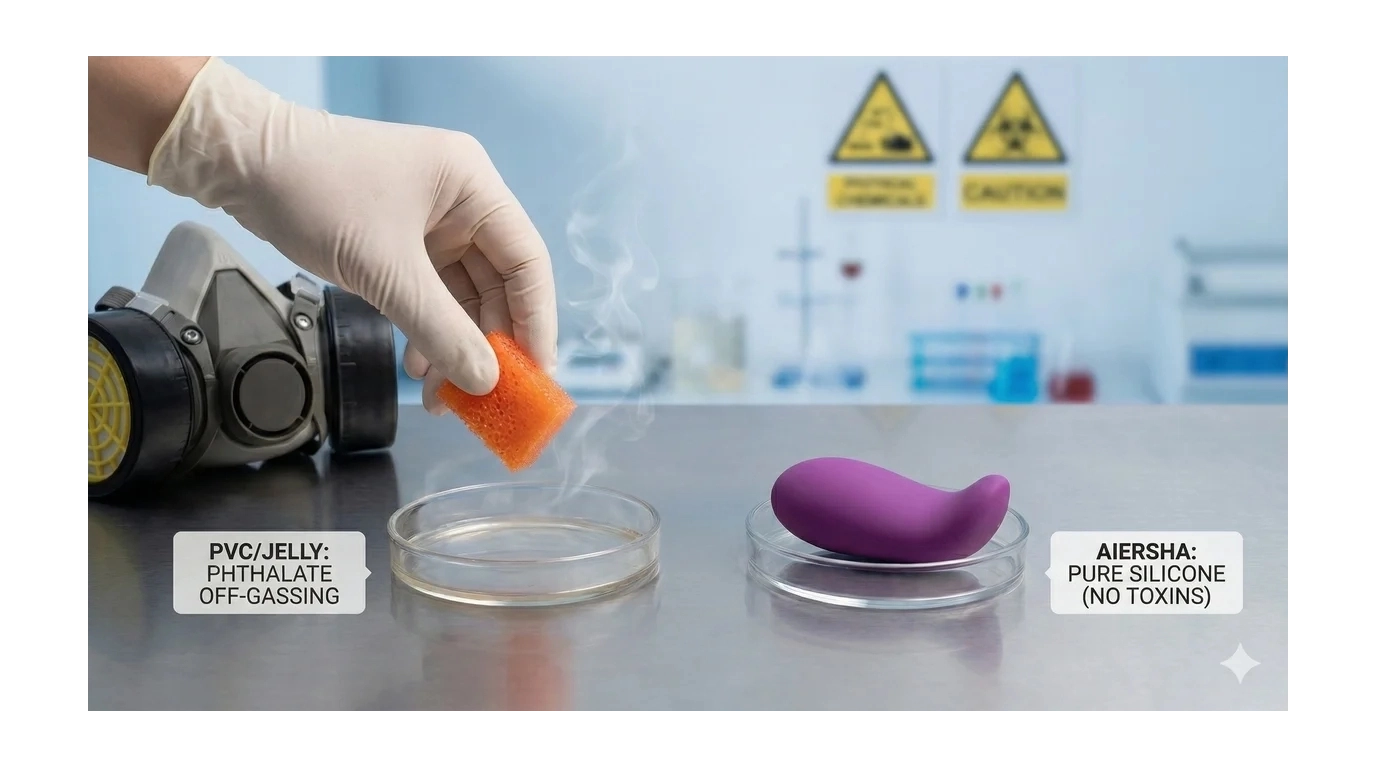
When choosing a sex toy, design and performance are important – but the material that comes into contact with your body matters just as much. Smooth, non-porous materials are generally easier to clean and less likely to retain germs than porous alternatives. Silicone is one of the most popular choices for intimate products, but quality depends on more than simply seeing the word “silicone” on the packaging.
When choosing a sex toy, design and performance are important – but the material that comes into contact with your body matters just as much. Smooth, non-porous materials are generally easier to clean and less likely to retain germs than porous alternatives. Silicone is one of the most popular choices for intimate products, but quality depends on more than simply seeing the word “silicone” on the packaging.
For products that are inserted into the body, non-porous materials are generally easier to keep hygienically clean. Common examples include 100% silicone, hard plastic, stainless steel, aluminium and break-resistant glass.
Non-porous surfaces do not absorb fluids in the same way as porous materials and are therefore easier to wash thoroughly between uses.
Some softer materials, including certain silicone blends, jelly rubber, PVC, vinyl, TPR and TPE, may be more porous. Depending on the formulation, they can be more difficult to clean completely and may retain microorganisms more easily.
High-quality silicone is widely used for intimate products because it can combine a soft feel with a smooth, non-porous surface.
It can also be flexible, durable and comfortable against the skin. Unlike materials that require plasticizers to become soft, silicone itself does not need phthalate plasticizers in the same way that flexible PVC commonly does.
However, not every product marketed as “silicone” is necessarily made from the same formulation or produced to the same quality standard.
The phrase “medical-grade silicone” is commonly used in marketing, but consumers should understand what it does – and does not – mean.
Medical-device standards such as ISO 10993 provide a framework for assessing biological safety and biocompatibility based on factors such as material composition, type of body contact and duration of exposure.
A material name alone does not prove that a finished sex toy has undergone a specific medical-device evaluation or certification.
When a manufacturer makes claims about ISO 10993 testing, biocompatibility or medical-grade materials, these claims should ideally be supported by documentation that applies to the relevant material or finished product.

| Feature | 100% Silicone | Some PVC / Jelly / TPE Materials |
|---|---|---|
| Surface | Typically non-porous | May be porous depending on formulation |
| Cleaning | Generally easier to clean thoroughly | May retain microorganisms more easily |
| Plasticizers | Silicone does not require phthalate plasticizers to remain flexible | Some formulations may contain plasticizers |
| Durability | Can be highly durable when properly cared for | Varies considerably by formulation and quality |
A strong or persistent chemical smell can be a reason to look more closely at a product, but smell alone cannot tell you exactly what a material contains or whether it is safe.
The same applies to stickiness, colour changes or surface degradation. These can indicate that a material is ageing or breaking down, but they are not laboratory tests.
If a toy develops cracks, peeling, an unusual sticky surface, persistent odour or other visible deterioration, replacing it may be the safest option.
There are many online tips claiming that consumers can identify real silicone by stretching, burning or pinching the material.
These methods are not reliable enough to determine the exact composition or quality of a product.
A better approach is to buy from a transparent manufacturer or retailer that clearly identifies the material and provides relevant product information.
Always follow the cleaning instructions supplied with the specific product.
Many non-porous silicone toys can be cleaned with warm water and mild soap, but electronic components, motors and charging systems may limit whether a product can be submerged or exposed to high temperatures.
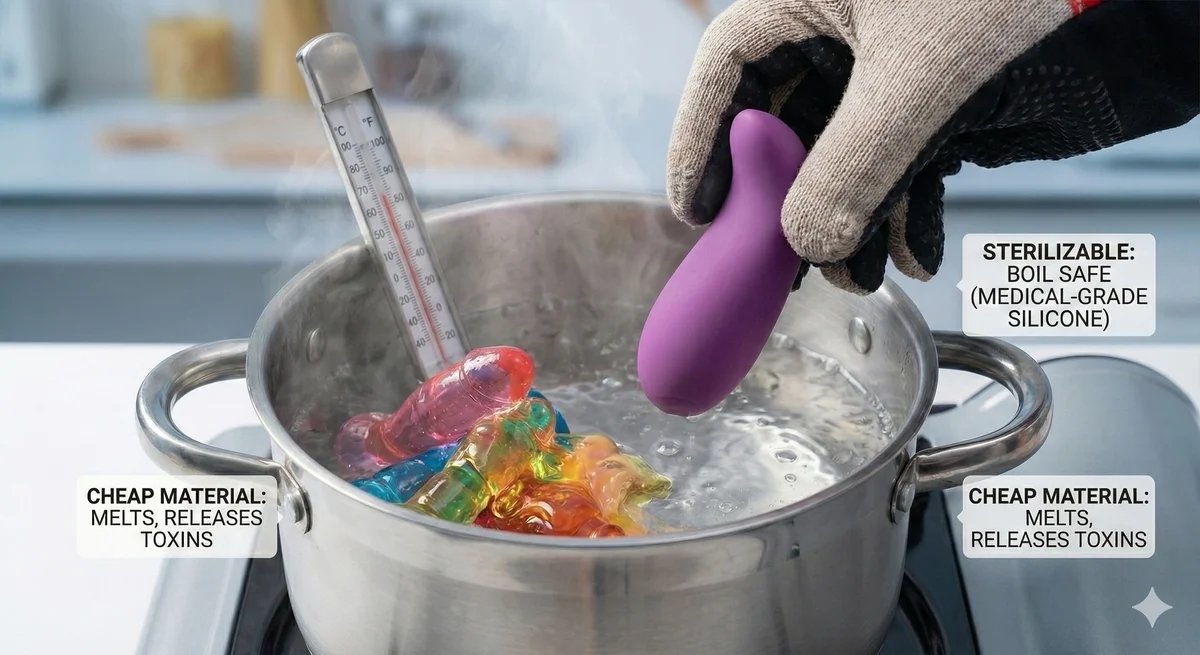
Do not automatically boil a silicone toy unless the manufacturer specifically confirms that the complete product is suitable for boiling.
Water-based lubricant is generally a convenient choice for most sex toys.
Some silicone-based lubricants can interact with the surface of silicone toys. If you are unsure about compatibility, follow the manufacturer's recommendations or test a small hidden area first.
A good intimate product should be evaluated as a complete product rather than by one marketing term.
Material composition, surface finish, manufacturing quality, electronic safety, waterproofing, cleaning instructions and transparent product documentation can all contribute to a safer and more comfortable experience.
For products intended for internal use, choosing a smooth, non-porous material from a trustworthy source is a sensible starting point.
100% silicone is considered a good non-porous option, but it is not the only suitable material. Hard plastic, stainless steel, aluminium and break-resistant glass can also be appropriate for intimate products.
No. Material safety depends on the specific formulation and manufacturing quality. However, some TPE, TPR, PVC and jelly materials can be porous and therefore more difficult to keep hygienically clean.
No. Even if the silicone itself tolerates heat, motors, batteries, adhesives or electronic components may not. Always follow the manufacturer's cleaning instructions.
There is no simple home test that reliably proves the exact composition or quality of silicone. Look for clear material information, transparent manufacturing claims and relevant testing documentation rather than relying on stretch or burn tests.
Material, design and manufacturing quality all influence how an intimate product feels and how easily it can be cared for. Discover products designed with comfort, quality and everyday use in mind.
Discover Our CollectionPlanned Parenthood – Consumer guidance on non-porous and porous sex toy materials, cleaning and lubricant compatibility: Sex Toys
ISO 10993-1 – International framework for evaluating the biological safety of medical devices: Biological evaluation of medical devices
Please sign in first.
Sign in


